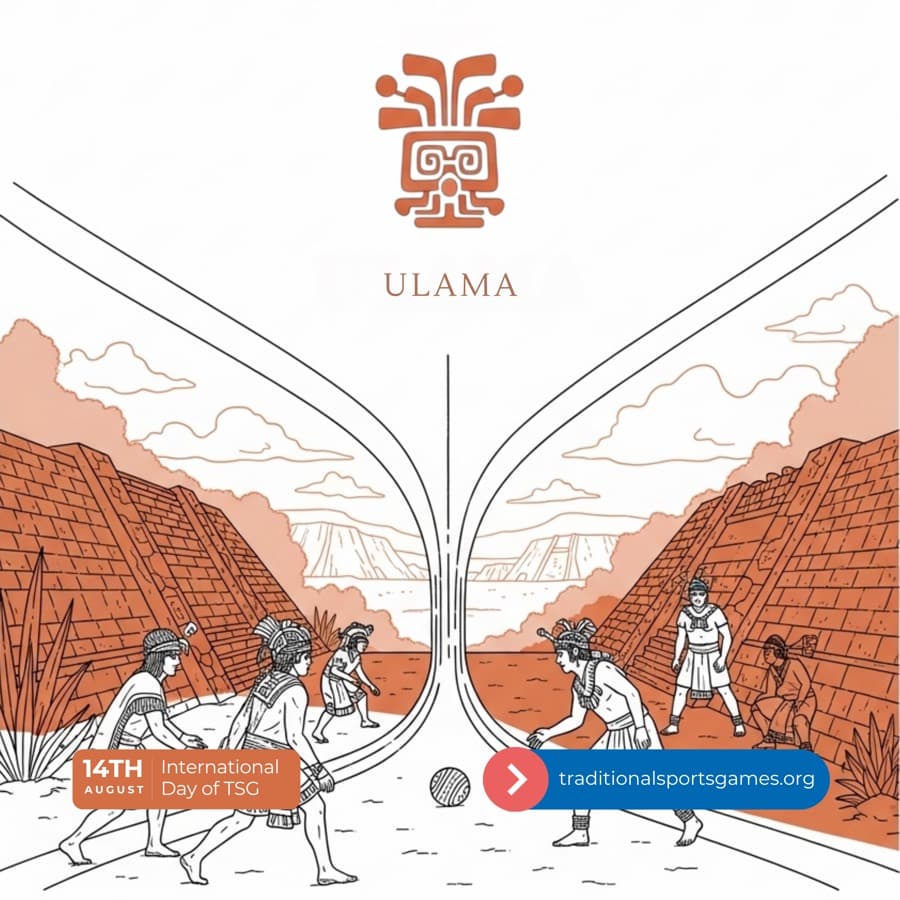
Ulama: The Ancient Mesoamerican Hip Ball Game of Ritual and Heritage Ulama is a culturally significant traditional sport rooted in the ancient civilizations of Mesoamerica, notably the Maya and Aztec peoples. Derived from the historical game Ullamaliztli, Ulama is one of the oldest continuously played ball games in the world, with over 3,500 years of history and more than 2,000 known ballcourts spread across ancient Mesoamerican sites. Today, it survives primarily in Sinaloa, Mexico, representing a vital component of intangible cultural heritage and indigenous knowledge systems. Historical and Ritual Significance Ulama was far more than a recreational game. Among the Maya and Aztecs, it was a ceremonial practice woven into religious, political, and social life. The game was often associated with rituals, cosmology, and spiritual symbolism, believed to represent the eternal struggle between day and night or life and death. Modern scholars acknowledge its role in reinforcing power structures, facilitating diplomatic rituals, and communicating sacred narratives through performing arts and public display. Modern Variations of Ulama Today, Ulama continues to thrive in specific communities of northern Mexico, particularly in the state of Sinaloa. Three main variations have survived:
Ulama de cadera – Played with the hip and a heavy rubber ball on a marked field called a taste, divided by the analco line. Ulama de brazo – Played using the forearm and a smaller rubber ball. Ulama de palo – Played with a wooden bat, allowing different dynamics and strategies.
Gameplay Rules and Strategic Elements
Teams aim to strike the ball across the central dividing line (analco) using only the allowed body part (hip, forearm, or bat). Points are awarded when an opposing team fails to return the ball across the line or commits a fault. Games are physically intense, requiring endurance, precision, and teamwork. Attire can include traditional garments in ceremonial matches, reinforcing cultural expression.
Educational and Cultural Value Ulama serves as a powerful tool for inclusive education and intergenerational transmission of indigenous identity. By teaching the sport, communities preserve language, ceremony, and ancestral narratives. It promotes values such as discipline, cooperation, and resilience. Schools and heritage organizations increasingly recognize Ulama as a means to foster cultural diversity and pride among youth. Community Engagement and Global Health Benefits
Physical Fitness: Improves agility, stamina, and coordination. Mental Focus: Requires strategic thinking and focus under pressure. Civil Society Engagement: Revived through festivals, workshops, and demonstrations across Mexico and beyond. Youth Empowerment: Offers alternatives to modern sports while reconnecting young people with cultural heritage.
UN and Sustainable Development Goals (SDGs)
SDG 4: Quality Education – Transmits indigenous knowledge through sport-based learning. SDG 5: Gender Equality – Encourages inclusive participation across genders in modern Ulama variants. SDG 10: Reduced Inequalities – Highlights and uplifts marginalized indigenous voices. SDG 11: Sustainable Communities – Supports resilient cultural ecosystems. SDG 16: Peace and Justice – Fosters respect for cultural expression and heritage rights. SDG 17: Partnerships for the Goals – Connects local practices to global safeguarding efforts through ICTSG and UNESCO.
Explore Related Traditional Games
Chinlone – Traditional ball game from Myanmar focused on teamwork and flow. Sipa – Indigenous kicking game from the Philippines. Atlı Cirit – Traditional equestrian javelin game from Turkey.
Call to Action Ulama stands as a remarkable testimony to the strength and depth of indigenous culture in the Americas. Let us honor and preserve this historic game by promoting its practice, integrating it into education, and supporting its safeguarding across generations. Your voice and participation matter in the global revival of traditional sports and games. Get Involved Benefits of Joining Support ICTSG About ICTSG: The International Council of Traditional Sports and Games (ICTSG) is dedicated to preserving, promoting, and revitalizing traditional sports and games as powerful tools for education, peace, and sustainable development.
About Us History Contact
When a sport disappears, it is like a language no longer spoken - its stories, values, and lessons risk being lost forever. When we revive a game, we revive a culture.
Khalil Ahmed Khan - President, ICTSG